Life sciences
MOTION CAPTURE SYSTEMS
FOR ANIMAL SCIENCE
Designed for all animal sciences


Vicon’s motion capture systems offer unparalleled flexibility, designed to accommodate any skeleton type and analyze the movement of various species, from horses to sheep and even bees. Whether your goal is to understand animal biomechanics, record movement, or analyze behavior, Vicon provides the optimal solution. Widely used in veterinary science, our technology supports accurate diagnoses of animal injuries by combining data collection with observational expertise. With a focus on optimizing marker tracking and minimizing post-processing time, we work closely with customers to tailor our systems to their specific needs.
Renowned for their accuracy and reliability, Vicon’s systems deliver valuable insights into animal movement, enhancing research and veterinary practices. In animal science, motion capture records detailed movement metrics such as joint angles and stride lengths, enabling researchers to study the biomechanics of various species, from large animals to insects. This technology supports behavioral studies and is an invaluable educational tool in veterinary schools, helping students understand complex movement mechanics. Additionally, it aids in research by providing data for studies on locomotion and animal welfare.

In a 2021 project co-led by Aaron Henry, PhD researcher at Texas A&M University and Jordan Ankerson, a Clinical Research Engineer and recent PhD graduate at Texas A&M, supervised by Dr. Andrew Robbins and Dr. Michael Moreno, studied the gait of 20 sheep in 100-degree Texas heat to advance understanding of hypophosphatasia (HPP), a rare metabolic bone disease. This research, driven by the personal stakes of Dr. Gaddy and Dr. Suva – whose granddaughter has HPP – aims to develop a model for studying quadrupeds and improving HPP research. Sheep were chosen over smaller animals due to their musculoskeletal similarities to humans. Despite the challenging conditions, the study provided valuable insights into the disease’s impact on gait.
Watch the video

Vicon’s motion capture systems are pivotal in the field of animal science, particularly in equine research. Our technology is used to analyze the motion of horses, helping in the diagnosis and treatment of equine lameness. By providing detailed motion data, Vicon’s systems enable veterinarians to identify issues early and develop effective treatment plans.
For equine lameness, motion capture offers an objective approach to diagnosing and treating gait abnormalities. By analysing detailed gait patterns, veterinarians can identify subtle asymmetries indicating lameness, allowing for early detection and precise treatment. The technology also helps monitor recovery by comparing pre-and post-treatment data, ensuring effective intervention.
Motion capture uses marker-based and markerless systems to track animal movements, with advanced software generating comprehensive reports. In equine research, universities and clinics use this technology to study biomechanics and monitor treatment outcomes. In sports, it helps optimize performance and prevent injuries.
See how we help customers capture and use motion data to improve performance, reduce injury, assist in rehabilitation, and more.
Watch our video showreel or get in touch to discuss how motion capture can be used for your specific application.

| Marker-based systems can track marker positions and be used to create skeletal models for any species, including animals |
| Absolutely. Motion capture can be used to monitor gait and mobility in livestock and pets, helping identify lameness, asymmetries, or other movement issues. In livestock, this can improve animal welfare and productivity by detecting early signs of injury or discomfort, while in pets, it can guide rehabilitation or assess the effectiveness of treatments. |
| Similar to human rehabilitation, motion capture allows veterinarians and therapists to assess how different interventions affect an animal’s movement, helping guide treatment plans and track progress over time |
| Capturing motion in animals is more challenging than in humans because animals cannot follow instructions reliably. It often requires extensive training, and sometimes only a portion of the recorded data is usable. Researchers need to be patient and creative to obtain meaningful motion capture results |
Motion capture records detailed movement metrics such as joint angles, stride lengths, and gait patterns, enabling researchers to study the biomechanics of various species with precision. By using marker-based or markerless systems, researchers can create skeletal models adapted to any animal type, from large animals like horses and sheep to smaller species and even insects. This quantitative data supports studies on locomotion, movement efficiency, and the impact of physiological conditions on gait. The technology is particularly valuable in studying rare metabolic conditions, evolutionary biomechanics, and the effects of environmental factors (such as temperature or terrain) on animal movement.
Yes. Vicon’s motion capture systems offer unparalleled flexibility and are designed to accommodate any skeleton type. This means they can analyze the movement of various species, from horses and sheep to more specialized subjects, by customizing skeletal models to match each animal’s unique anatomy. Nexus software includes native skeleton templates for common animals, and researchers can also build custom templates for species-specific requirements. This versatility makes motion capture suitable across all animal sciences, whether you’re studying large livestock, companion animals, or small laboratory specimens.
Vicon’s motion capture systems are renowned for their accuracy and reliability. For equine lameness diagnosis, for example, the technology enables veterinarians to identify subtle asymmetries in gait patterns that may indicate lameness or movement abnormalities, detecting issues that would be difficult to spot through observation alone. The system captures data with the precision needed to track recovery by comparing pre- and post-treatment gait patterns, ensuring that interventions are effective. However, capturing motion in animals requires patience and creativity, as animals cannot follow instructions the way humans can. Extensive training and careful data collection protocols are often necessary to obtain meaningful results.
Motion capture provides veterinarians and researchers with objective, quantitative data that enhances diagnosis, treatment planning, and rehabilitation monitoring. Key benefits include:
(1) Early detection of movement issues like lameness or asymmetries before they become severe;
(2) Precise treatment planning based on detailed biomechanical data rather than observation alone;
(3) Recovery monitoring by comparing pre- and post-treatment motion data to assess the effectiveness of interventions;
(4) Research advancement into conditions affecting animal welfare and mobility; and
(5) Educational value in veterinary schools, where students can visualize and understand complex movement mechanics. Additionally, in livestock management, motion capture can improve animal welfare and productivity by detecting early signs of injury or discomfort.
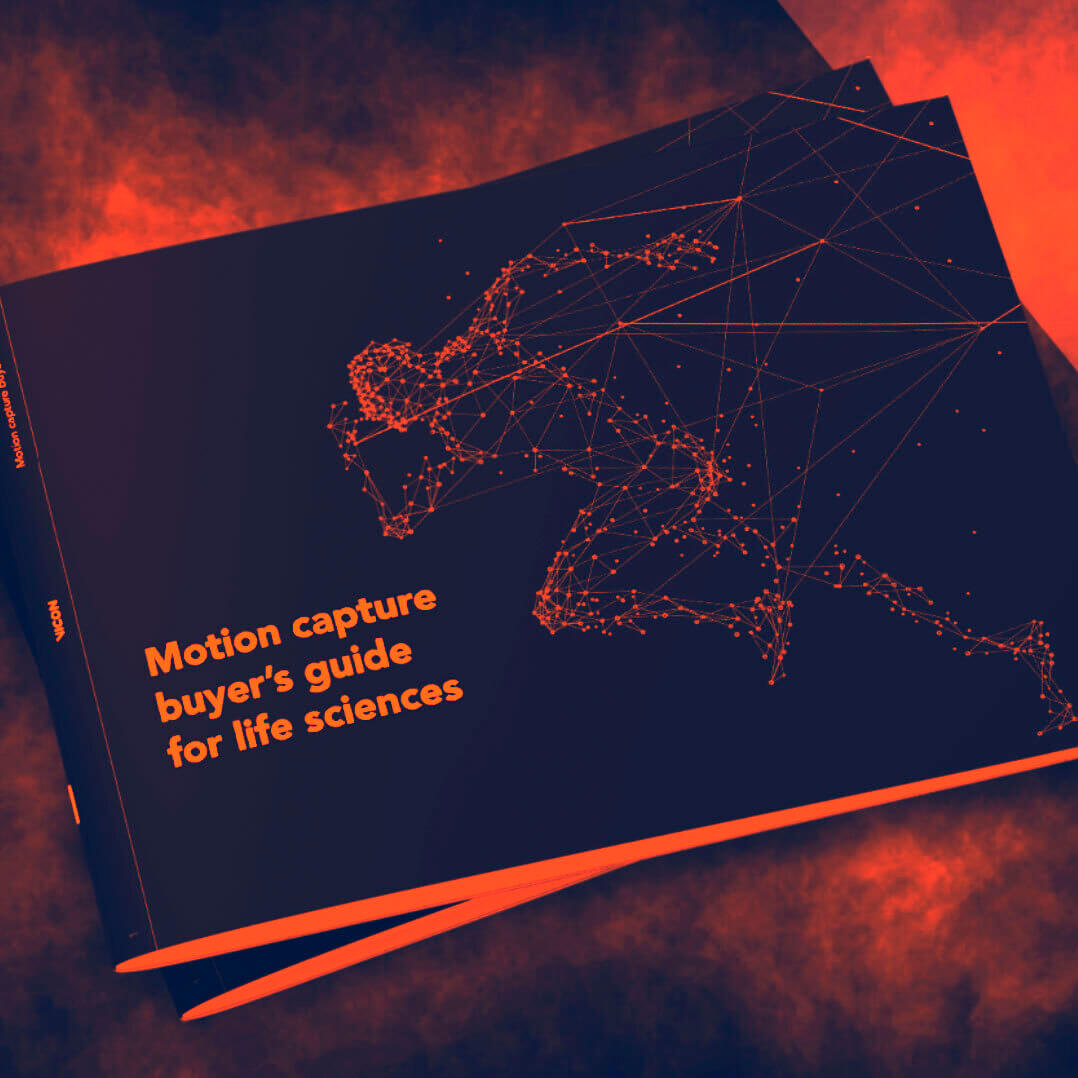
Everything you need to know to make an informed decision.
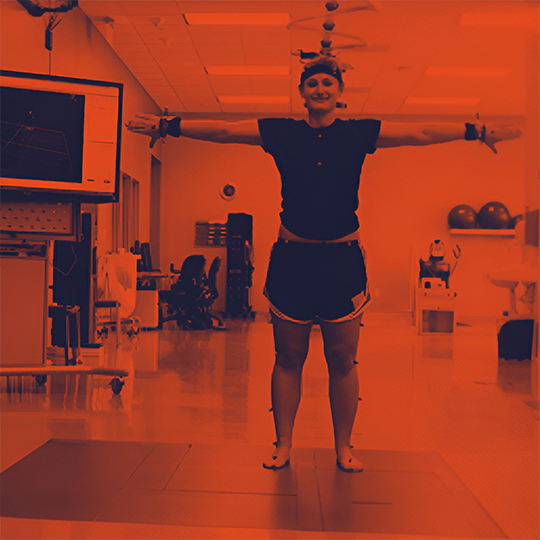
Nexus, our life sciences software, has many powerful native skeleton templates for your use

Nexus also enables you to build your own robust custom skeleton templates for reliable labelling
Vicon started in life sciences and developed its offering in partnership with these customers
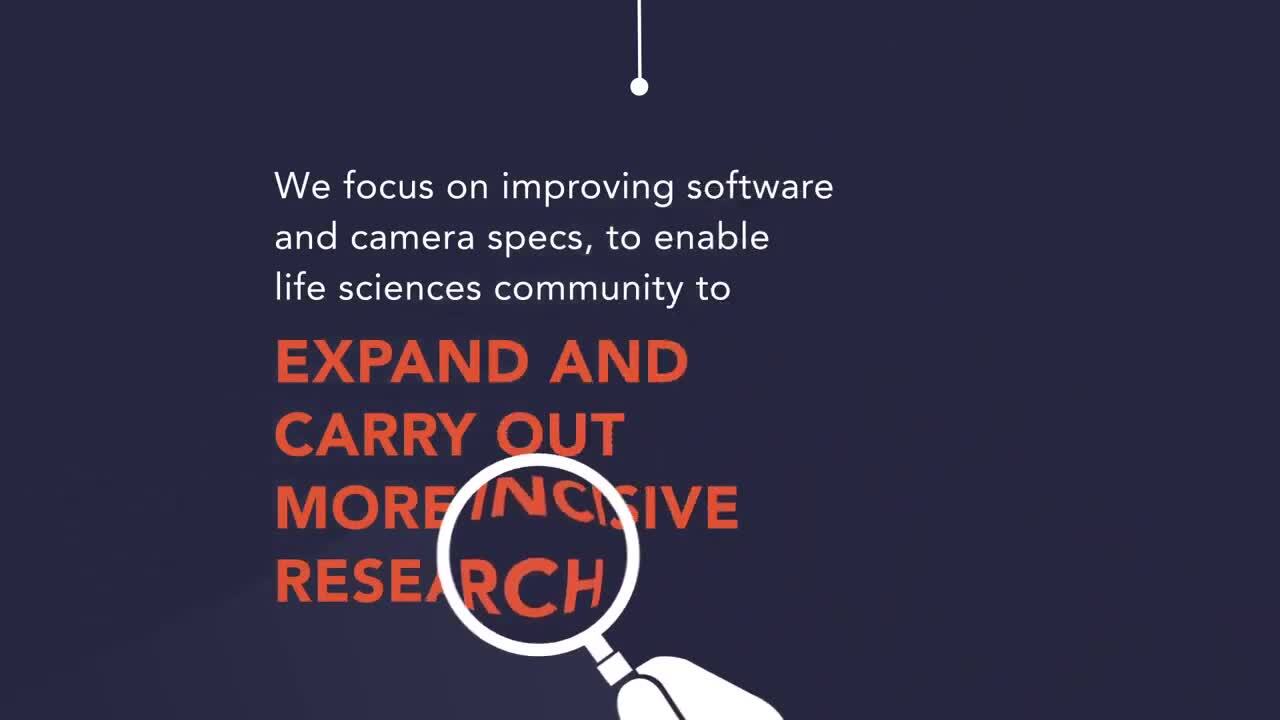

Our renowned software developed specifically for the life sciences community. With Vicon you don’t get a one-size-fits-all approach, we tailor our products to your unique needs.
With it you can:

Our newest reporting tool built based on dialogue with our community. Nexus Insight simplifies reporting, saves time, and gives you control of your data, all within Vicon’s best-in-class motion capture ecosystem.
Whether you choose to use our automated reporting tools or create your own custom templates, Nexus Insight will bring clarity to your reporting, making it easier to visualize, interpret, share and compare your data.

Vicon provides a range of useful tools, utilities and information for our customers that are all fully integrated with our Nexus software. Visit our downloads page to see what’s available:

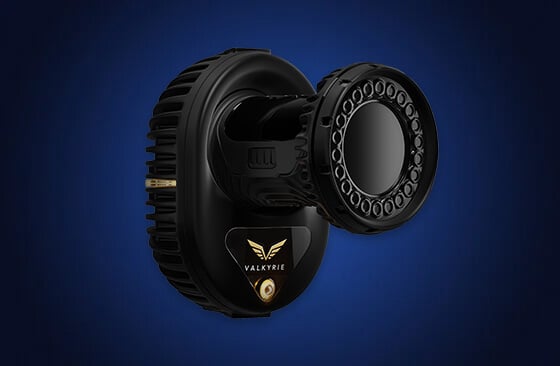
Valkyrie is the most powerful motion capture camera ever brought to market, offered with four different specs with four different focuses: resolution, speed, value, and strobeless.
The next generation of our market-leading IMU, Blue Trident is a lightweight, easy to use, flexible and reliable inertial sensor. From elite to grassroots sports, the improved, form-fitting device can capture the highest load activities and provide immediate real-time analysis in the field.
Capture up to 200g with this dual-sensor inertial device and you immediately have access to data encompassing the peaks of the body’s performance, to measure activity, analyse improvements and chart recovery.

Vicon motion capture is the industry leader in camera tracking and virtual production solutions. Our team is happy to provide more information, answer questions and help you find the virtual production solution you need.