
As trusted by:
We work with the leading Biomechanists, Hospitals and Universities to ensure Vicon systems deliver the highest accuracy, flexibility and performance.

ExerCube
ZHAW Zurich University of Applied Sciences, Zurich University of the Arts (ZHdK), and Swiss startup Sphery have advanced fitness gamification with an immersive rehabilitation program for ACL injuries. Eveline Graf from ZHAW noted the project aimed to fill a rehabilitation gap through Sphery’s ExerCube, which features interactive 3D game environments and haptic feedback. Anna Lisa Martin-Niedecken of Sphery emphasized the interdisciplinary approach, combining biomechanics, physiotherapy, and game design, saying “It was really vital to have this Vicon system at the very beginning of the project to allow us to include the right movements for the training concept we were developing for the new exergame concept”. To date, the ExerCube is used in about 50 global fitness and rehab centres.
Watch the video
Biomechanics movement analysis
Vicon leads the way in motion capture technology for biomechanics, delivering advanced solutions for tracking and analyzing both human and animal movement. Our systems are integral to research and practical uses, including gait analysis and sports science. Vicon’s focus on accuracy and dependability ensures that our optical and inertial motion capture systems provide deep insights into biomechanics, helping researchers and practitioners enhance their understanding of movement and achieve better results across various applications.
As a pioneer in motion capture biomechanics, Vicon leverages four decades of experience to offer cutting-edge optical and inertial tracking technologies designed to monitor, analyze, and improve human movement for everyone. Equipped with some of the most sophisticated motion-capture cameras and sensors in the world, our goal is to deliver impactful real-time insights.
When it comes to motion capture applications, Vicon’s technology sets the benchmark for biomechanists, researchers, and students. Our top-tier hardware, along with adaptable desktop and mobile software, offers a complete array of modeling tools and accessories for professionals and patients alike. For decades, we have been proud to provide the most extensive motion capture system for biomechanics available. New to the field? Our guide explains what biomechanics is and how a movement analysis is carried out, stage by stage.
View the Life Sciences Buyer’s Guide
Build and customise your system
Data beyond clinical settings

Biomechanists analyze the mechanical aspects of movement, focusing on how forces impact the body. They study patterns, injury mechanisms, performance optimization, and design prosthetics and orthotics. Motion capture and tracking technology are essential for this work, offering detailed, three-dimensional insights into body movements.
Biomechanists use motion capture systems to precisely measure joint angles, velocities, and dynamic movements, providing valuable data on gait and posture. Integrating force plates and pressure sensors help assess how forces interact with the body. Real-time feedback from motion tracking allows immediate adjustments during experiments or training.
In clinical settings, motion capture tracks rehabilitation progress, helping adjust treatment plans based on observed changes in movement patterns. The technology also integrates with tools like electromyography (EMG) to provide a comprehensive view of muscle activity and movement. Additionally, biomechanists use motion capture for R&D to test and refine new equipment or techniques.
Overall, motion capture and tracking technology provide biomechanists with precise data to enhance performance, prevent injuries, and develop effective treatments, making it a critical tool in advancing biomechanical research and applications.
Vicon Motion Capture System for Biomechanics Analysis in action
See how we help customers capture and use motion data to improve performance, reduce injury, assist in rehabilitation, and more.
Watch our video showreel or get in touch to discuss how motion capture can be used for your specific application.

RESOURCES
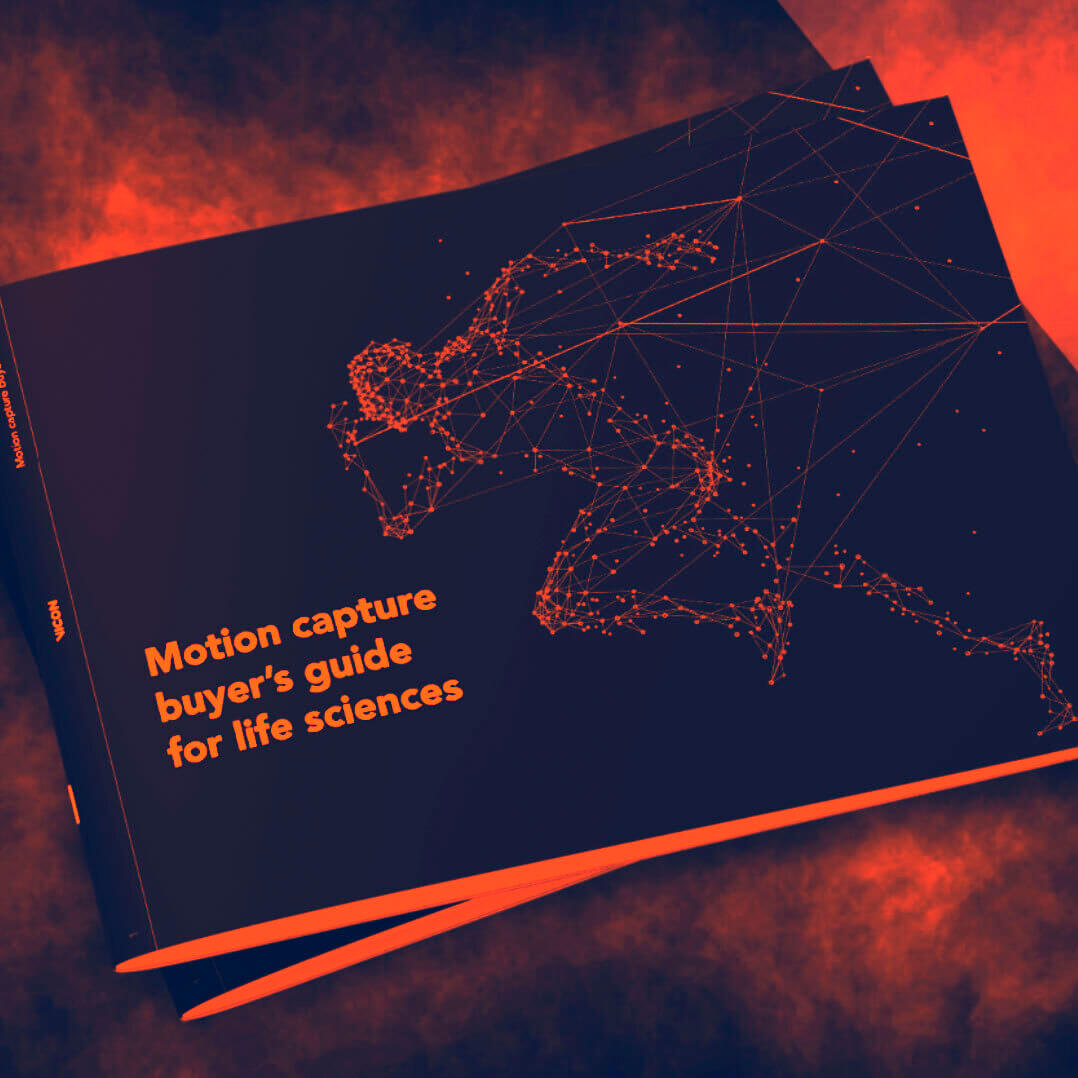
Everything you need to know to make an informed decision.
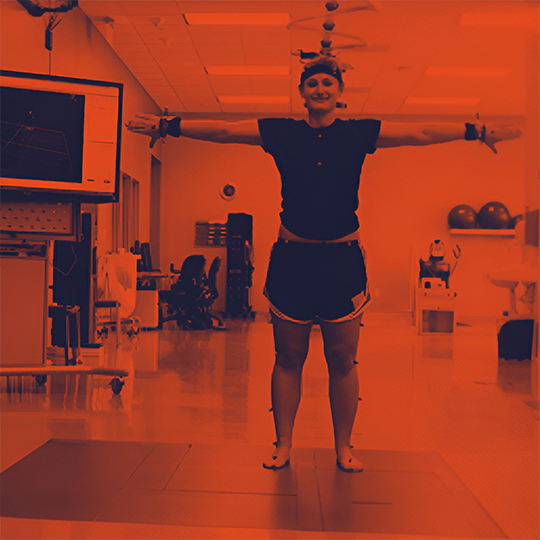
Nexus, our life sciences software, has many powerful native skeleton templates for your use

Nexus also enables you to build your own robust custom skeleton templates for reliable labelling
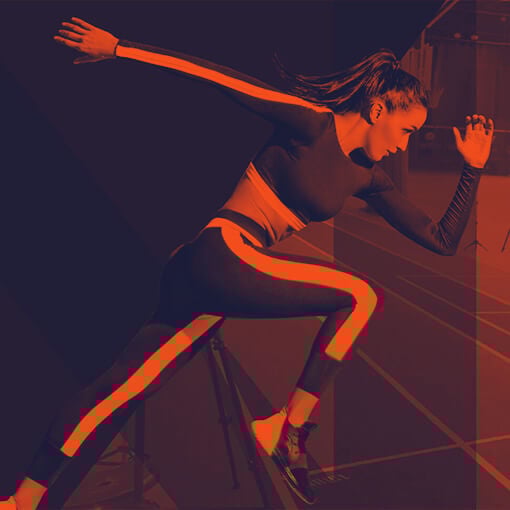
Vicon started in life sciences and developed its offering in partnership with these customers
Watch

THINGS YOU DIDN’T KNOW ABOUT VICON IN LIFE SCIENCES

VICON'S LIFE SCIENCES ECOSYSTEM
VICON LIFE SCIENCES SHOWREEL
FAQ's
How is motion capture used to study joint angles and muscle activity?
| Motion capture tracks the orientation of body segments over time. By comparing adjacent segments—such as the thigh and shank—joint angles can be calculated, like the knee. Repeating this for multiple joints, and applying knowledge of human biomechanics, allows estimation of which muscles are likely active to produce the observed movement. While MoCap alone cannot measure actual muscle activity, combining it with techniques like EMG provides insight into muscle activation patterns. |
Can mocap help in understanding injury mechanisms?
| Capturing data during an actual injury is typically not feasible. Instead, researchers use MoCap to analyze movement patterns before and after injuries, allowing them to make inferences about factors that may contribute to injury risk |
How does motion capture contribute to ergonomic or prosthetic design?
| Identifing how a person’s actual movement differs from optimal or expected patterns, allowing designers to develop ergonomic solutions or prosthetic devices that guide users toward safer, more efficient movement |
What markers or sensors are best for detailed biomechanical analysis?
| For detailed biomechanical analysis, optical markers are commonly preferred because they allow accurate tracking of segment positions and joint angles. Inertial sensors (IMUs) can complement or replace them when capturing movement in less controlled environments, and wearable sensors like EMG electrodes or force insoles are often added to measure muscle activation and loading. The best choice depends on the required accuracy, the environment, and the specific biomechanical variables being studied |
Can motion capture be used to model human movement in 3D simulations?
| Yes, motion capture can be integrated into both virtual and predictive 3D simulations. In virtual environments, it enables real-time interaction within platforms like Unreal, while in predictive modeling tools such as OpenSim, MoCap data can be used to explore how changes in coordination or muscle activation might alter overall movement patterns |
SYSTEM COMPONENTS
Software
NEXUS
Our renowned software developed specifically for the life sciences community. With Vicon you don’t get a one-size-fits-all approach, we tailor our products to your unique needs.
With it you can:
- Trust your system to capture clinically-validated data
- Carry out powerful analysis and modelling of data
- Save time with highly customisable yet simple processing pipelines

NEXUS INSIGHT
Our newest reporting tool built based on dialogue with our community. Nexus Insight simplifies reporting, saves time, and gives you control of your data, all within Vicon’s best-in-class motion capture ecosystem.
Whether you choose to use our automated reporting tools or create your own custom templates, Nexus Insight will bring clarity to your reporting, making it easier to visualize, interpret, share and compare your data.

Tools
DOWNLOADS
Vicon provides a range of useful tools, utilities and information for our customers that are all fully integrated with our Nexus software. Visit our downloads page to see what’s available:
- Models and scripts – e.g. Oxford Foot Model
- Reporting software – Polygon
- System setup app – Vicon Control
- Third party plugins
- Sample data sets
- Utilities
- SDKs

Cameras
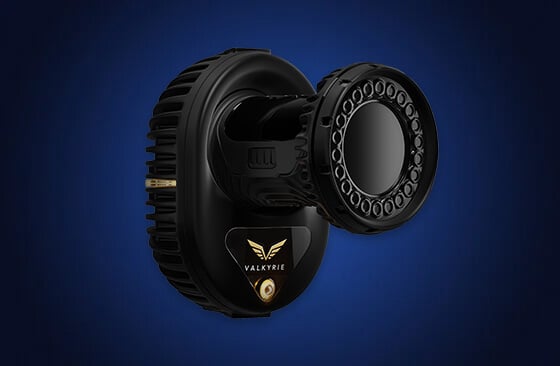
VALKYRIE
Valkyrie is the most powerful motion capture camera ever brought to market, offered with four different specs with four different focuses: resolution, speed, value, and strobeless.
Inertial
BLUE TRIDENT
The next generation of our market-leading IMU, Blue Trident is a lightweight, easy to use, flexible and reliable inertial sensor. From elite to grassroots sports, the improved, form-fitting device can capture the highest load activities and provide immediate real-time analysis in the field.
Capture up to 200g with this dual-sensor inertial device and you immediately have access to data encompassing the peaks of the body’s performance, to measure activity, analyse improvements and chart recovery.

GET IN TOUCH
Vicon motion capture is the industry leader in camera tracking and virtual production solutions. Our team is happy to provide more information, answer questions and help you find the virtual production solution you need.